近年來,家用美容設(shè)備市場蓬勃發(fā)展,消費者對去皺、抗衰老產(chǎn)品的需求持續(xù)增長。作為一種將電能直接轉(zhuǎn)換為光的半導(dǎo)體設(shè)備,半導(dǎo)體激光器與其他用于皮膚再生的激光源相比,具有許多優(yōu)勢,包括較高的轉(zhuǎn)換效率、較小的尺寸和較低的成本。
本文介紹了1470nm半導(dǎo)體激光器在家用嫩膚中的應(yīng)用,由炬光科技產(chǎn)品經(jīng)理吳佩等撰寫,原文發(fā)表于《Laser Focus World》2021年4月刊,全文如下:
1470 nm Diode Lasers Enable Home Skin Rejuvenation
Osier Wu, Kevin Yang
FOCUSLIGHT TECHNOLOGIES INC.
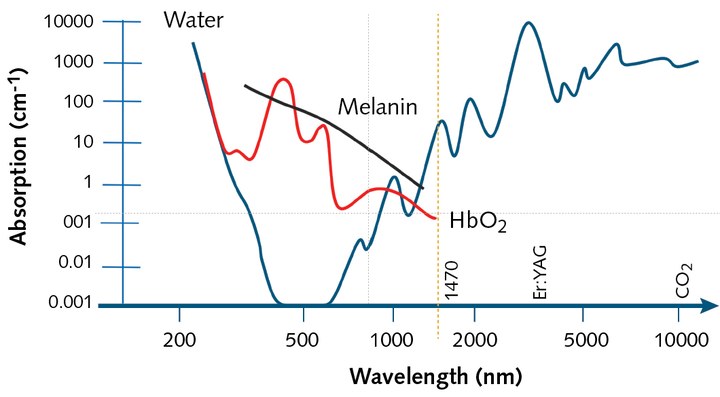
FIGURE 1. Lasers commonly used for fractional photothermolysis treatment have wavelengths highly absorbed by water and less absorbed by melanin and hemoglobin.
Laser-based technologies effectively treat cutaneous damage from the sun, as well as scars, wrinkles, and freckles. Since development of the first carbon dioxide (CO2) laser for skin resurfacing in the 1980s, lasers have been widely used for skin rejuvenation, as the technologies have evolved from ablative, to non-ablative, to the currently popular fractional method.
The ablative CO2?lasers first commercialized for skin rejuvenation applications provide the most significant treatment result by vaporizing water in skin tissue. However, exposing the entire treatment area to the ablative laser necessitates prolonged 7- to 10-day recovery times, and increases the risk of adverse effects such as infection, long-term erythema, and crusting. Consequently, pre- or post-operative procedures commonly include oral antibiotics, ice-cooling, and anti-inflammatories.
The non-ablative lasers introduced later overcame some of these issues, but produce results that are inconsistent and often unpredictable. Fractional photothermolysis (FP), introduced in 2004 by Manstein et al.,1?reduces treatment risk and side effects, and eliminates recovery downtime, driving their increased popularity today.
Fractional Photothermolysis
FP devices are classified into two categories: ablative and non-ablative. Because water is the main target chromophore for such treatment, the lasers commonly used have wavelengths highly absorbed by water and less absorbed by melanin and hemoglobin. Longer wavelengths in the range of 2.79 to 10.6 μm, typically CO2?(10.6 μm) and Er:YAG (2.94 μm), are ablative lasers that vaporize the tissue due to strong absorption of water (see Fig. 1) such that the optical penetration depth is minimal (see Fig. 2).
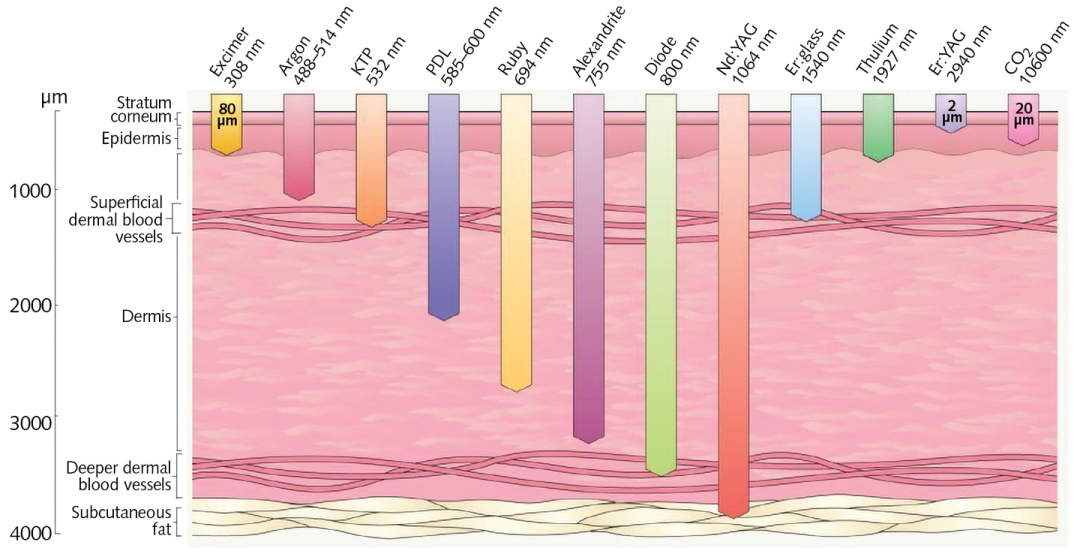
FIGURE 2. Lasers can penetrate deep into the dermis (1470 nm around 400 μm, and 1550 nm up to 1600 μm.(Image credit: Plastic Surgery Key)
During such treatment, the stratum corneum will be damaged and a small hole of a certain depth on skin will be produced. To increase the penetration depth into the dermis, higher energy density is required. When the energy density exceeds the vaporization threshold, the resulting depth will relate to the energy, independent of the applied wavelength.
Shorter wavelengths ranging from 1320 to 1927 nm usually do not remove skin, but coagulate the skin tissue as a result of thermal effects.
Er:glass (1540 nm), Nd:YAG (1320/1440 nm), and diode (1470/1550 nm) lasers are the most common non-ablative fractional laser sources. Water absorption at 1470 and 1550 nm is lower than Er:YAG or CO2?lasers, but is relatively higher than 810–1060 nm (see Fig. 1). Such lasers can penetrate deep into the dermis (1470 nm around 400 μm, and 1550 nm up to 1600 μm; see Fig. 2). During non-ablative treatment, the stratum corneum remains undamaged, so skin is intact and no superficial damage can be seen.
Light at 1060 nm or shorter wavelengths can penetrate deep into the subcutaneous fat layer or deep dermis, but is highly absorbed by melanin and hemoglobin. As a result, this is not a good choice for skin rejuvenation. Light at 755–1060 nm can be used for hair removal.
1470 nm Diode Lasers
As a monolithic semiconductor device that converts electrical energy directly into light, the diode laser, when compared with other laser sources for skin rejuvenation, has many advantages, including conversion efficiency, compact size, and cost. Thanks to these benefits, diode laser-based skin rejuvenation devices can be designed for at-home use. Here, we will discuss the basic principles of using a 1470 nm diode laser for home-use skin rejuvenation.
Laser skin rejuvenation is based on the theory of selective photothermolysis,2?which states that tissue chromophores will selectively absorb different wavelengths. Common chromophores in human tissues are water, hemoglobin, and melanin, among which the water is the primary chromophore (70% of the tissue) for the skin rejuvenation treatment.
Compared with other wavelengths, a 1470 nm laser provides a suitable absorption coefficient for water and can penetrate approximately 400 μm deep into the dermis. Lasers with wavelengths longer than 1400 nm can be strongly absorbed in the eye’s cornea and lens, which means the energy often doesn’t reach the retina. Under the maximum permissible exposure (MPE), the 1400 nm light source is considered safe. The MPE at 1470 nm is a million times below that of the 1400 nm wavelength (see Fig. 3).
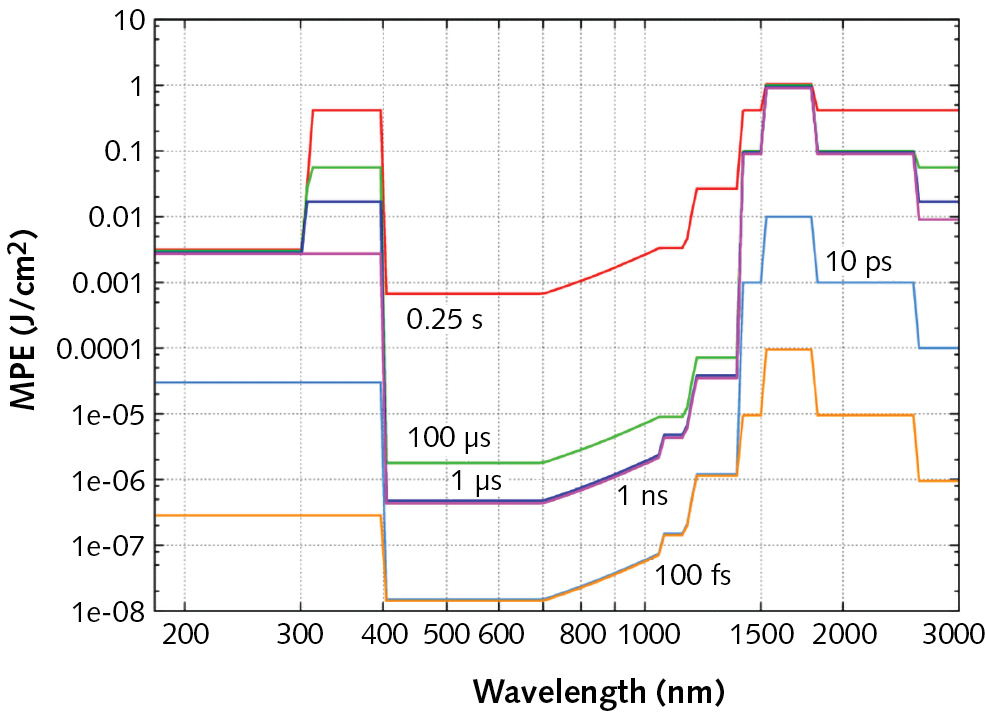
FIGURE 3. MPE as energy density vs. wavelength for various exposure times.(Image credit: Wikipedia)
Treatment employing a fractional method produces small three-dimensional thermal injuries or columns, also known as microscopic treatment zones or microthermal zones (MTZs). The size of MTZs usually does not exceed 400 μm so that fibrosis or inflammation will not be induced. With larger MTZs, fibrosis is caused instead of wound healing. Both the size and penetration depth of MTZs depend on the laser wavelength and input energy. For the same laser, the higher the power introduced, the bigger the MTZs and the deeper they penetrate.
At-Home Treatment
During the FP treatment, the only thermal damage area is the MTZs; surrounding tissues remain intact, acting as a reservoir for cell regeneration. MTZ density should be well controlled, as a sufficient amount of undamaged tissue is required to ensure a quick repair process. However, the cumulative density should be enough to provide a satisfactory clinical result. Usually, MTZs should account for not greater than 40% of the treatment area so that the epidermis can be regenerated in 24–48 hours.
Within 24 hours after the treatment, necrotic cells in the epidermis are replaced by active cells surrounding MTZs. The degenerated necrotic cells are known as microscopic epidermal necrotic debris (MENDs, including necrotic epidermal tissue and dermal tissue, melanin, and elastin), which will migrate through the stratum corneum and be excreted through the epidermis. During the treatment, new collagen and elastin tissue will be also be stimulated.
Solid-state lasers like Er:glass and Nd:YAG are challenging to be installed in at-home devices due to their size, heat dissipation, and cost. It is the commercialization of diode lasers that makes home-use laser skin treatment possible. A 1470 nm fractional laser (a laser that delivers a beam with multiple MTZs into the skin) has been proven to be useful for both professional systems and home-use devices. Some commercialized at-home devices, including RéAura (Philips; Amsterdam, Netherlands) and the Tria Age Defying Laser (Tria Beauty; Dublin, CA), are FDA-approved.
Unlike professional systems, at-home devices have smaller treatment areas with fewer MTZs. Professional systems usually have higher MTZ density and shorter pulse width due to the high power (dozens of watts) of the laser source. The MTZ/cm2?can be 50, 100, 500, or even 1000 cm2. With professional treatments, a few sessions are enough to see the result. For an at-home device, MTZ/cm2?usually does not exceed 40 due to lower power (a few watts), so many more treatments are needed (3–4X per week and continue for a few weeks).
For at-home use devices, due to limited heat dissipation capacity and smaller dimensions, diode laser power is restricted to the range of 1 to 15 W, whether single emitter, multiple emitters, or bar. Specific optical designs can generate a single spot of 100 to 200 μm, a spot line, or a spots array. Spot energy is usually within 15 mJ/spot and pulse widths are 10 to 60 ms. Since at-home devices have to be air-cooled, heat dissipation has to be designed well.
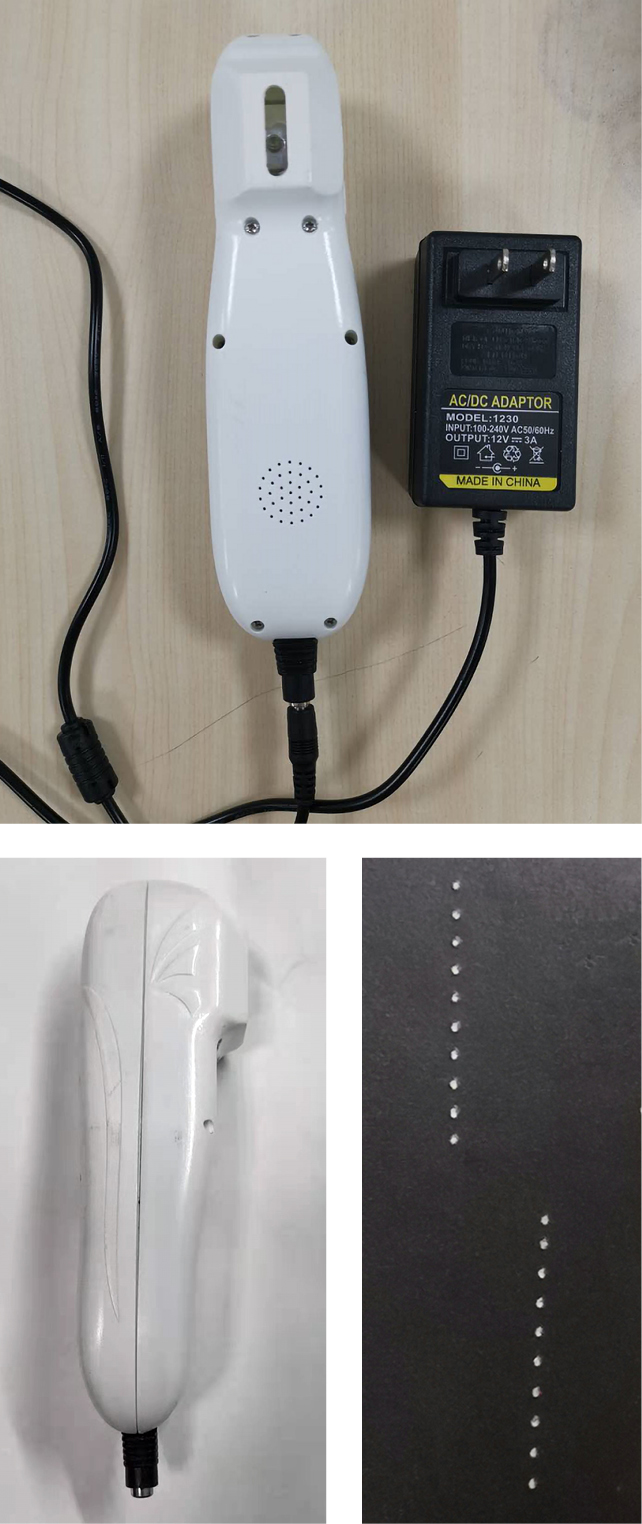
FIGURE 4. A home-use, non-ablative 1470 nm fractional laser demo system (200g, 210 × 55 × 60 mm3) at Focuslight and the spots it generates.
Like professional devices, both stamping and rolling treatment modes can be adapted for the at-home version. In stamping mode, the MTZ pattern is preset by the device. During treatment, the device will stamp region by region until the entire treatment area is covered (no movements during light-emitting time/pulse width). Stamping mode can cover all areas with high precision, but results in a longer treatment time.
In rolling mode, the operator must move the device continuously to cover the treatment area. As the device is moving during the light-emitting time, the actual spot will be elongated compared to the designed spot size, depending on the movement speed and pulse width. Both methods are recommended based on the user’s preference and the parameters of the device.
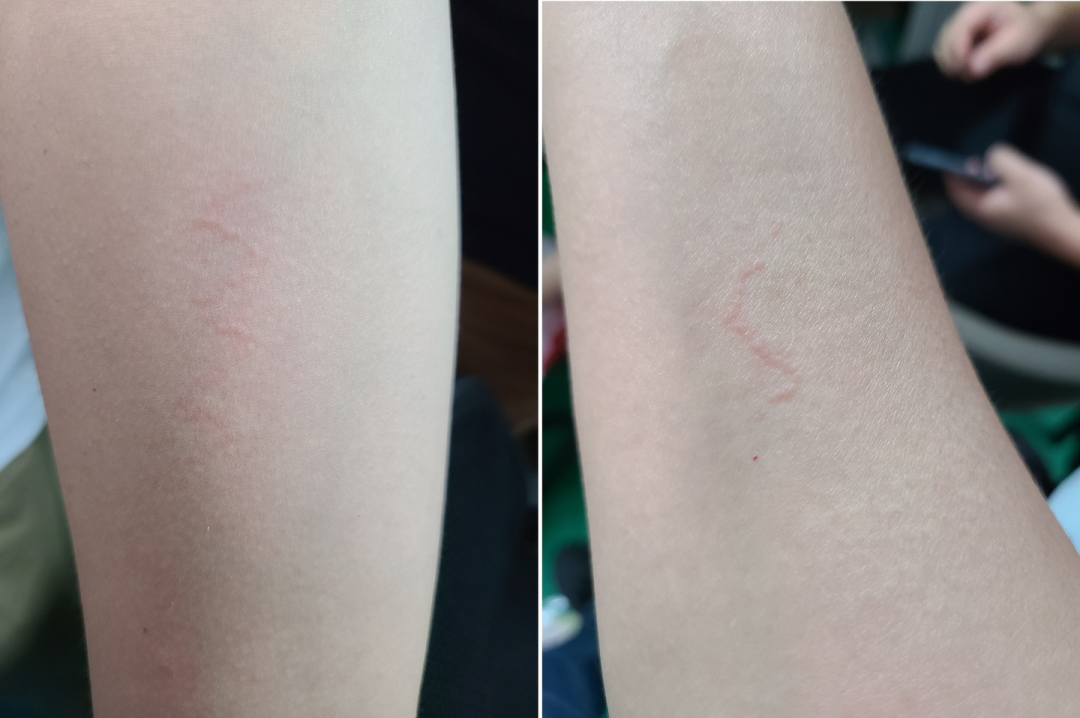
FIGURE 5. Less erythema can be seen after the treatment by the Focuslight demo system under 10 ms, at 10 mJ/spot.
Home-Use Demo System Results
A home-use demo system was built in the Focuslight lab with a 1470 nm, 1.5 W diode laser (see Fig. 4). Spot size is 100 × 100 μm and energy is from 6 to 12 mJ/spot. The demo system is built with an adapter, but a commercial device usually has a battery.
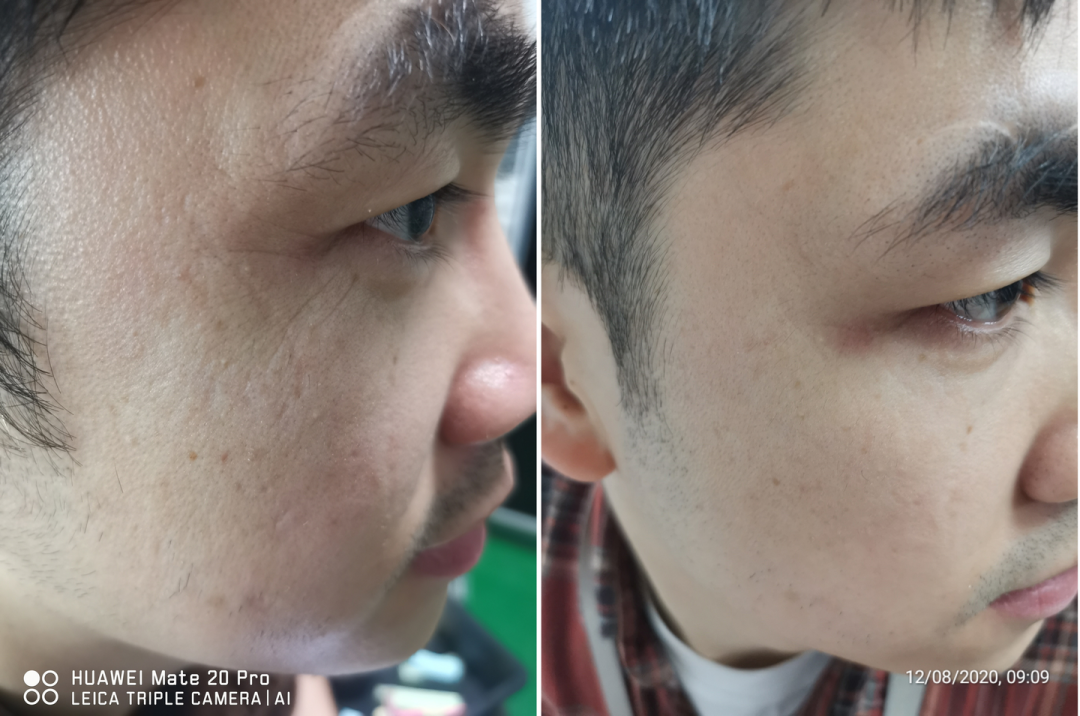
FIGURE 6. Treatment of periorbital wrinkles by the Focuslight demo system at 10 ms, at 10 mJ/spot. Treatment is done 3X per week; after 5 weeks, reduction in wrinkles can be seen.
The results showed less erythema on the skin right after treatment (see Fig. 5). Unlike professional treatments, current at-home devices are only indicated by the FDA to treat periorbital wrinkles (see Fig. 6), but this device also was effective for fading acne marks on the face (see Fig. 7). To treat deeper wrinkles, scars, and even stretch marks, professional systems at clinics or hospitals can be deployed.
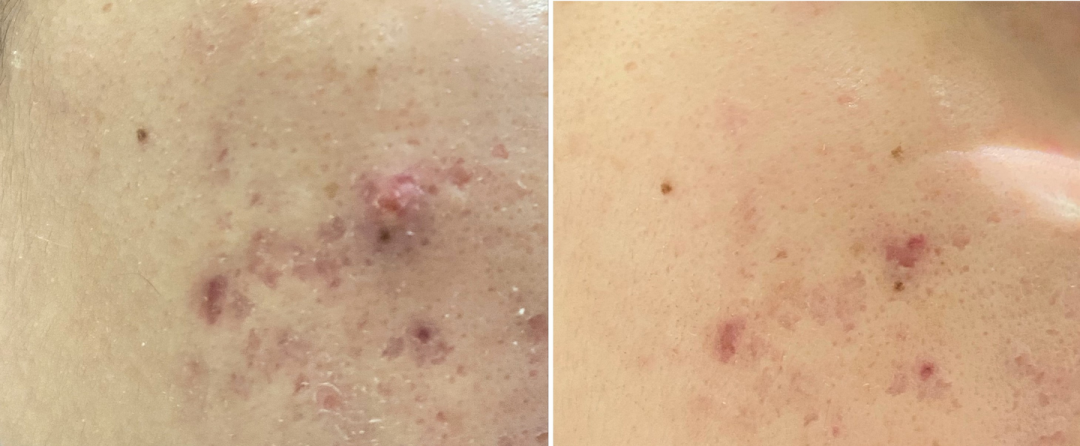
FIGURE 7. Treatment of an acne scar by the Focuslight demo system at 10 ms, at 10 mJ/spot. Treatment is done 3–4X times per week; after 5 weeks, the acne marks are reduced and skin texture is improved.
The home-use beauty device market has grown significantly during recent years and is driving increased use of 1470 nm lasers for skin rejuvenation. The home-use market will continue to boom, as consumer demand is high for easy to use, at-home devices. With the increasing size of the geriatric population, demand for anti-aging products such as wrinkle removal for skin laxity improvement applications will continue to grow, further fueling the market.
References
1. D. Manstein, G. S. Herron, R. K. Sink, H. Tanner, and R. R. Anderson,?Lasers Surg. Med., 34, 5, 426–438 (2004).
2. R. R Anderson and J. A. Parrish,?Science, 220, 4596, 524–527 (Apr. 29, 1983); doi:10.1126/science.6836297.
3. E. P. Tierney, D. J. Kouba, and C. W. Hanke,?Dermatol. Surg., 35, 10, 1445–1461 (Oct. 2009); doi:10.1111/j.1524-4725.2009.01258.x.
4. X. Leihong and Z. Zhanchao,?Laser Treatment Theory and Technology for Dermatology, People’s Medical Publishing House, 59–60 (2014).
5. C. Albert, “Fractional vs. non-fractional laser,” Congress handout, 6 (2017).
6. X. Wenlin,?Chinese J. Aesthetic Med., 1535 (2009).
7. K. Nouri,?Lasers in Dermatology and Medicine, Springer, 123–133 (2011).
8. S. B. Kaushik and A. F. Alexis,?J. Clin. Aesthetic Dermatol., 52 (2017).
Meet the authors
Osier Wu has been senior sales manager for medical and aesthetic products at Focuslight Technologies Inc. for years. Currently she is the product manager for home use medical and aesthetic products focusing on the in-depth study of different home use medical and aesthetic products and applications. Email: wup@focuslight.com.
Kevin Yang is director of medical and aesthetic product line at Focuslight Technologies Inc. He focuses on the study of high-power diode lasers for medical and aesthetics applications. Kevin Yang has a master’s degree in engineering from Northwest University. Email:?yangk@focuslight.com.
關(guān)于炬光科技:
西安炬光科技股份有限公司成立于2007年,是一家全球領(lǐng)先的專業(yè)從事高功率半導(dǎo)體激光器、激光微光學(xué)元器件、光子技術(shù)應(yīng)用解決方案的研發(fā)、生產(chǎn)及銷售的國家級高新技術(shù)企業(yè)。公司圍繞光子技術(shù)及應(yīng)用領(lǐng)域,致力于為全球客戶提供高功率半導(dǎo)體激光器與激光微光學(xué)核心元器件及光子技術(shù)應(yīng)用解決方案,形成了全面、完善的研發(fā)、生產(chǎn)及銷售服務(wù)體系。








 返回
返回